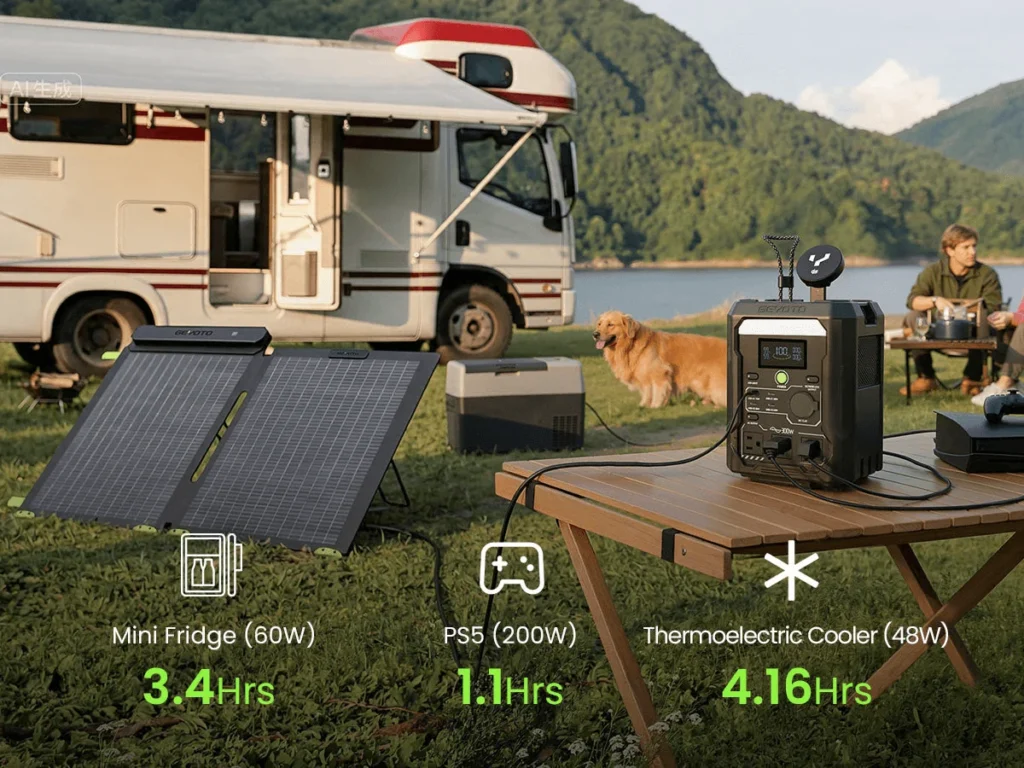

When choosing a battery for backup power, homeowners and businesses often compare lithium battery technologies to determine which offers the best combination of safety, capacity, lifespan, performance, and value. Two of the most widely used lithium-ion chemistries are lithium iron phosphate (LiFePO4) and lithium nickel manganese cobalt oxide (NMC). Each technology has advantages, but their differences can significantly affect how well a battery performs as an emergency power source.
This LiFePO4 vs NMC battery comparison explores the key characteristics of both technologies and explains which one may be better suited for backup power applications.
Understanding LiFePO4 and NMC Batteries
LiFePO4 batteries use lithium iron phosphate as their cathode material. They have become increasingly popular in portable power stations, solar energy storage systems, RV applications, and residential backup systems because of their long cycle life and strong thermal stability.
NMC batteries use a combination of nickel, manganese, and cobalt. This chemistry is widely used in electric vehicles, portable electronics, power tools, and energy storage products. NMC batteries are known for providing high energy density while maintaining relatively compact dimensions.
Although both are lithium-ion technologies, their chemical compositions give them different performance characteristics. Understanding those differences is important when selecting a battery that may need to provide dependable power during outages.
Energy Density and Size
One of the major advantages of NMC batteries is their high energy density. They can store substantial amounts of energy relative to their size and weight. This makes NMC particularly attractive when portability and compact design are important.
For example, a portable power station using NMC cells may be lighter and smaller than a comparable unit using LiFePO4 cells. Consumers who need to move their battery frequently may therefore appreciate the weight advantage.
LiFePO4 generally has lower energy density. A battery with the same usable capacity can require somewhat more physical space and may weigh more. However, for stationary backup applications, this difference is often less important because the battery does not need to be carried regularly.
Battery Lifespan
Battery lifespan is one of the strongest reasons many backup-power buyers consider LiFePO4 technology.
LiFePO4 batteries generally support significantly more charge and discharge cycles than conventional NMC batteries when properly managed. Depending on the specific cells, battery management system, operating conditions, and depth of discharge, LiFePO4 systems can provide thousands of cycles.
NMC batteries can also offer a substantial service life, but repeated deep cycling can lead to faster capacity degradation compared with LiFePO4 in many applications.
For a backup battery that may be charged and discharged frequently because of solar integration or regular energy management, longer cycle life can make LiFePO4 particularly attractive.
Safety and Thermal Stability
Safety is another important consideration in any backup power system.
LiFePO4 chemistry is known for strong thermal and chemical stability. It generally has a lower risk of thermal runaway compared with many other lithium-ion chemistries. Its stable chemistry makes it well suited for residential energy storage and emergency backup applications.
NMC batteries have also become highly engineered and can be used safely when designed with appropriate battery management systems, thermal controls, protective circuitry, and quality cells. However, NMC chemistry is generally more thermally sensitive than LiFePO4.
This does not mean that every LiFePO4 battery is automatically safer than every NMC battery. Battery construction, certification, charging equipment, installation, ventilation, and the battery management system all matter. Buyers should evaluate the complete battery system rather than chemistry alone.
Depth of Discharge and Usable Capacity
Backup power users often want to extract as much usable energy from their batteries as possible. Depth of discharge refers to how much of a battery’s stored energy can be used before recharging.
LiFePO4 batteries are commonly designed to tolerate relatively deep discharge cycles while maintaining good longevity. This can provide a useful balance between usable capacity and battery life.
NMC batteries can also deliver substantial usable capacity, but manufacturers may establish different operating limits to protect cells and extend service life.
When comparing products, consumers should look beyond the advertised watt-hour rating. A 1,000Wh battery, for example, does not necessarily provide 1,000Wh of practical AC output under every operating condition. Inverter efficiency, reserve capacity, temperature, and manufacturer discharge limits can affect actual performance.
Charging Performance
Both battery technologies can charge efficiently when paired with compatible charging systems. Actual charging speed depends on cell design, battery capacity, charger output, temperature, and the battery management system.
NMC batteries can provide strong charging performance in many applications, while LiFePO4 batteries have become increasingly competitive as charging technology has improved.
For solar backup systems, the complete charging ecosystem is important. A battery should be compatible with the solar charge controller, inverter, solar panels, and other components. Compatibility can matter just as much as chemistry.
Performance in Different Temperatures
Temperature can influence lithium battery performance and longevity.
Both NMC and LiFePO4 batteries can experience reduced performance in cold conditions. In particular, charging lithium batteries at temperatures below the manufacturer’s permitted range can damage cells.
Many modern LiFePO4 batteries designed for backup power include low-temperature charging protection or built-in heating systems. These features can be especially useful for systems installed in cold environments.
High temperatures can also accelerate battery degradation. Regardless of chemistry, keeping a battery within its recommended operating temperature range is essential for long-term performance.
Cost and Long-Term Value
Initial purchase price is another factor in the LiFePO4 vs NMC battery comparison.
NMC batteries can sometimes have an advantage when manufacturers prioritize compactness, weight, or high energy density. LiFePO4 batteries may have a higher upfront cost in some products because of their cell configuration and construction.
However, comparing purchase price alone can be misleading. A battery that lasts substantially longer and supports more cycles may provide better value over its service life.
For backup systems that are used frequently, LiFePO4’s long cycle life can make its higher initial investment worthwhile. For occasional emergency use, buyers may place greater importance on size, weight, and upfront cost.
Which Battery Is Better for Backup Power?
For many home and solar backup applications, LiFePO4 is the stronger overall choice. Its long cycle life, thermal stability, deep-discharge capability, and strong durability make it particularly well suited for systems expected to operate for many years.
NMC can still be an excellent option when portability and energy density are priorities. A lightweight NMC power station may be convenient for camping, travel, mobile work, and situations where the battery must frequently be transported.
For stationary emergency backup, however, weight and compactness may be less important than reliability and longevity. This gives LiFePO4 a significant advantage.
Choosing the Right Battery for Your Needs
The best battery chemistry depends on how you intend to use the system. Before purchasing, consider the appliances you need to operate, required watt-hours, peak power requirements, expected outage duration, charging options, available installation space, climate, and how frequently the battery will be cycled.
For occasional emergency backup, either chemistry can work well when the product is properly designed. For frequent cycling, solar storage, and long-term home backup, LiFePO4 is often the more compelling option.
Final Thoughts
This LiFePO4 vs NMC battery comparison shows that neither chemistry is universally superior. NMC offers excellent energy density and can be a practical choice when low weight and compact size are essential. LiFePO4, meanwhile, stands out for longevity, thermal stability, durability, and suitability for repeated cycling.
For most homeowners seeking dependable long-term backup power, LiFePO4 provides an appealing combination of safety, usable capacity, and service life. NMC remains valuable where portability and high energy density take priority. Ultimately, selecting a reputable battery with a quality battery management system and appropriate safety protections is just as important as choosing the chemistry itself.
